
Many travelers who search for a taxi from Bergen Airport are not really looking for a short local transfer. What they often want is a practical way to reach one of Norway’s most spectacular fjord destinations. Geiranger is high on many itineraries because it combines dramatic scenery, iconic viewpoints, and memorable outdoor experiences in one place, but getting there from Bergen requires more planning than a standard airport pickup.
The route from Bergen Airport to Geiranger is a long regional journey through Western Norway. Mountains, fjords, road conditions, and timing all shape the travel experience, which is why the best solution depends on more than distance alone. For visitors who value comfort, efficiency, and a smooth start to their trip, it makes sense to look beyond the idea of a conventional taxi and think in terms of a better transfer strategy.
For some guests, that may mean a private ground transfer combined with scenic stops. For others, helicopter transport offers a more efficient and premium alternative to many hours on the road. Fjord Helikopter operates both the Airbus H125 and H130, and the H130 is especially well suited to passenger transport, with room for up to seven people, a range of just over 600 kilometers, and an enclosed tail rotor that helps reduce both internal and external noise.
Why the journey from Bergen Airport to Geiranger needs planning
Geiranger is one of Norway’s most famous fjord destinations, but it is not close to Bergen in the way travelers normally think about an airport transfer. This is not a simple city-to-hotel route. It is a substantial journey into the fjord region, and that changes the way travelers should approach transport planning from the moment they land.
Instead of asking only how to get from Bergen Airport to Geiranger, it is more useful to ask what kind of journey fits the trip best. Some visitors want to turn the route itself into part of the holiday, moving slowly through scenic roads and overnight stops. Others want to reach Geiranger as efficiently as possible so they can spend more time enjoying the destination.
That distinction matters because the transfer can shape the entire first day of the trip. A long and fragmented journey may leave guests tired before they even reach the fjord experiences they came for. A more carefully designed transfer helps preserve both time and energy for the highlights waiting in Geiranger.
Choosing the right transfer after landing in Bergen
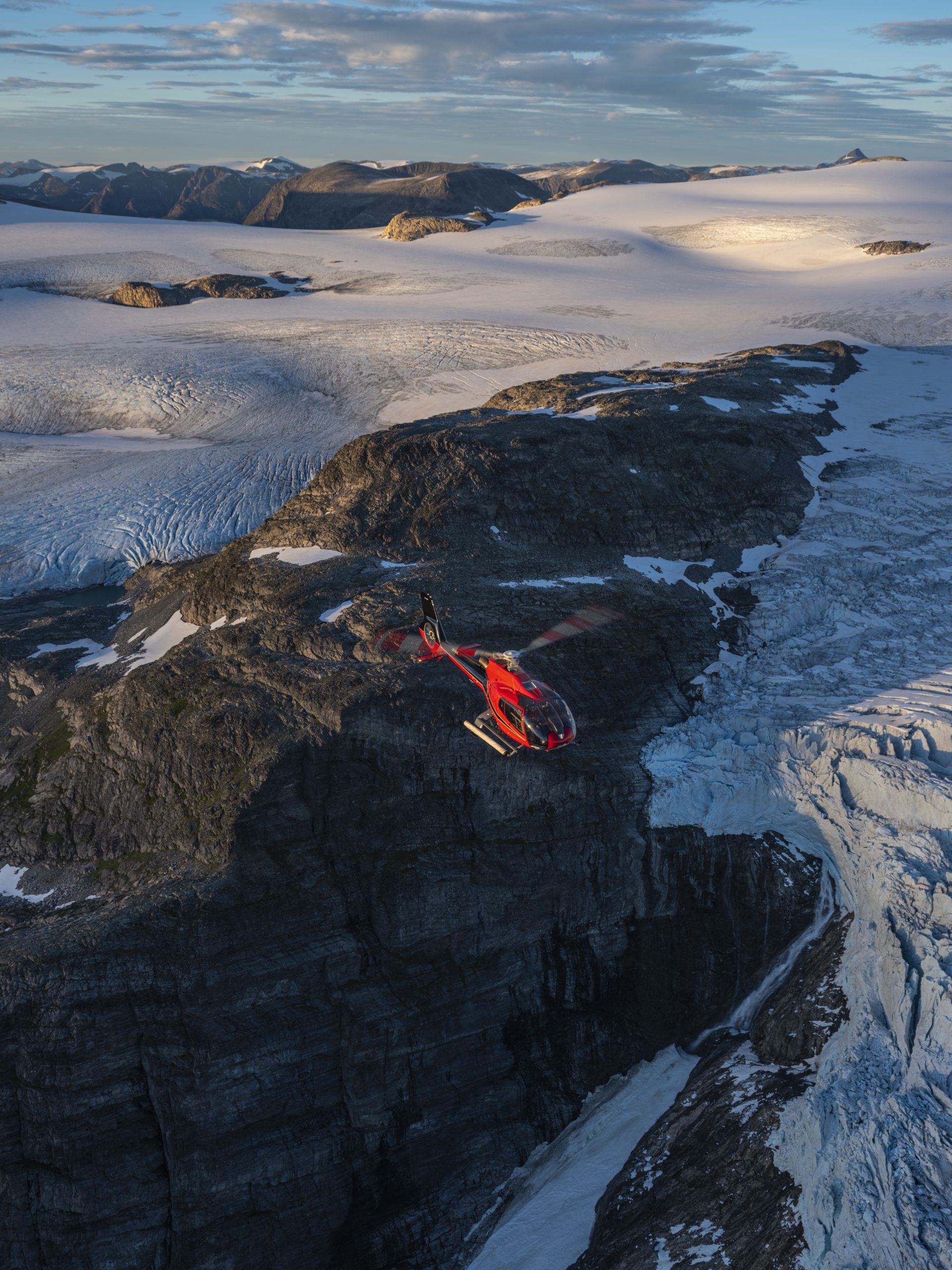
The best onward option after Bergen Airport depends on timing, group size, and the structure of the itinerary. Solo travelers with flexible plans may be more comfortable with a longer road journey, while families, private groups, and business travelers often place a higher value on staying together and moving efficiently.
Private ground transport remains a strong option for travelers who enjoy road-based sightseeing and do not mind the hours involved. It offers privacy and flexibility, and it can work well when the route includes planned stops in other fjord destinations. Still, because Geiranger is deep in the landscape of Western Norway, road travel from Bergen is a serious commitment.
Helicopter transport offers a different type of value. Rather than spending much of the day in transit, travelers can make the journey itself more direct and more memorable. This can be especially attractive for premium leisure guests, hosted groups, anniversary trips, and curated Norway itineraries where time is limited and comfort matters.
When helicopter transfer makes the most sense
Helicopter travel is not only about speed. It is also about reducing friction in complex regional travel. If the goal is to connect Bergen with high-value experiences in the fjord region without losing a full day to road logistics, a helicopter segment can make the itinerary far more elegant.
The Airbus H130 used by Fjord Helikopter is particularly effective for this type of regional passenger movement. With seating for up to seven passengers, it allows small groups to travel together in one aircraft rather than splitting across several vehicles. Its range of just over 600 kilometers also supports meaningful regional planning where conditions allow, making it easier to connect key destinations in a single day.
Travelers already exploring premium regional routes may also be interested in options such as helicopter taxi in Aurland, where fjord transport becomes part of the experience rather than just a practical necessity.
What makes Geiranger worth the journey
Geiranger remains one of the most sought-after destinations in Norway because it captures the fjord landscape at its most dramatic. Visitors are drawn by steep mountains, deep blue water, famous waterfalls, and viewpoints that create the kind of scenery many international guests imagine before they arrive in Norway.
Its appeal is not limited to one attraction. Geiranger works so well because it offers several rewarding experiences in one destination, making the effort of getting there feel worthwhile. When the arrival is handled well, travelers can focus on the destination itself rather than on the fatigue of the journey.
Viewpoints, fjord scenery, and outdoor experiences
Among the most popular things to do in Geiranger are exploring panoramic viewpoints, taking fjord cruises, enjoying guided nature activities, and experiencing scenic mountain roads. The destination gives visitors multiple ways to engage with the landscape, whether they want a quiet visual experience or a more active day outdoors.
This is exactly why smart transfer planning matters. If too much of the day is consumed by transport, guests may arrive with less time for the activities that inspired the trip in the first place. A better route protects the value of the destination by making sure travelers still have the energy to enjoy it.
Geiranger in a wider fjord itinerary
Many travelers do not visit Geiranger on its own. It is often part of a broader journey through Fjord Norway that may also include places such as Aurland, Loen, Olden, or Hardanger. In that context, the transfer from Bergen Airport is the first step in a larger chain of experiences, and the quality of that first step can influence the whole itinerary.
For guests interested in combining Geiranger with other major highlights, a tailored helicopter route can make the travel plan far more efficient. Travelers considering mountain and fjord experiences in the same trip may, for example, find inspiration in helicopter taxi to Loen Skylift, which shows how direct regional transport can strengthen a premium fjord itinerary.
Private ground transfer versus helicopter transport
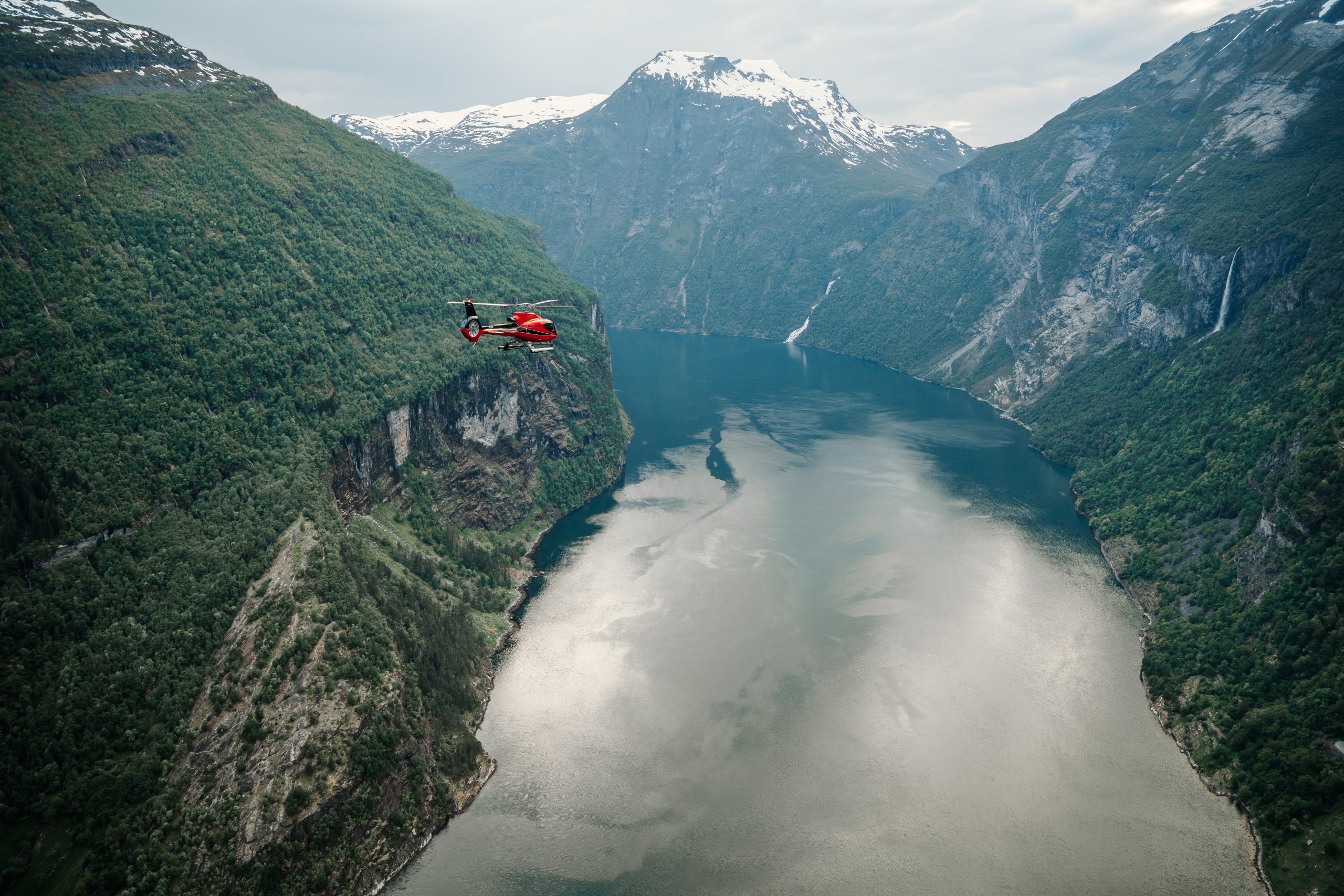
There is no single answer that suits every traveler, but there is a clear difference between the two main approaches. A private car transfer offers a comfortable and scenic way to travel by road, and for some guests that slower pace is part of the appeal. It allows flexibility, stops along the way, and a more gradual arrival into the fjord region.
Helicopter transport, by contrast, is built around access, time efficiency, and a more exclusive travel experience. In Western Norway, where geography is often the main challenge, an aerial route can remove some of the least practical parts of the journey and create a smoother path between key destinations. Rather than letting road infrastructure define the day, travelers gain a more deliberate way to move through the region.
This is particularly valuable for families, corporate groups, luxury travelers, and private parties with fixed schedules. In these cases, the transfer is not only a logistical detail. It is part of the overall quality of the trip, and the right choice can make the difference between a rushed itinerary and a well-balanced one.
The value of the H130 for regional passenger travel
When travelers consider alternatives to long overland journeys, the aircraft itself becomes an important part of the decision. Fjord Helikopter’s Airbus H130 is designed with passenger comfort in mind and is especially effective for regional tourism and private group transport in Western Norway.
Its cabin capacity of up to seven passengers makes it practical for small groups that want to stay together throughout the journey. The range of just over 600 kilometers supports flexible itinerary design across the fjord region, while the enclosed tail rotor helps lower noise levels and improves the onboard experience. In a landscape where long distances and complex terrain are part of everyday travel, those qualities make a real difference.
Alongside the H130, Fjord Helikopter also operates the Airbus H125, giving additional flexibility across different travel and charter needs. For visitors planning a high-value journey through Norway’s fjords, that combination creates strong options for designing a route that feels both efficient and memorable.
From airport arrival to a better fjord experience
The idea of a taxi from Bergen Airport to Geiranger is best understood as a broader travel-planning question. The real goal is not simply to move from one point to another, but to do so in a way that protects time, comfort, and the quality of the overall experience. Once that becomes the focus, the solution often extends beyond a conventional taxi transfer.
Some travelers will prefer a scenic overland route with private ground transport and carefully chosen stops. Others will benefit more from a premium transfer strategy that includes helicopter travel and a more direct connection into the fjord region. What matters most is matching the transport choice to the purpose of the trip so that Geiranger can be enjoyed at its best.
For visitors who want to experience more of Western Norway without spending unnecessary hours in transit, Fjord Helikopter offers a practical way to rethink the journey. With modern Airbus H125 and H130 capacity, including the seven-seat H130 built for comfortable regional passenger travel, the company is well positioned to help travelers move more smoothly from Bergen toward the fjord experiences that matter most.